
A parent emails us some version of this almost every week. My kid is nine, lives and breathes soccer, and everyone keeps mentioning private training. Are we too early, or already behind? The honest answer usually surprises them.
Here is the short version. There is no magic birthday. The right time to start private soccer lessons depends far more on where your child is developmentally, and on whether they actually want it, than on the number of candles on the cake. Let us walk through it, age by age.
Most kids get the biggest return from private soccer lessons between ages 10 and 12, once their coordination, focus, and game understanding can absorb detailed coaching. Motivated younger players from about 7 to 9 can benefit from occasional one-on-one sessions to fix a specific skill. Before age 7, prioritize free play over formal lessons.
What age should a child start private soccer lessons?
There is no universal starting age, but ages 10 to 12 are when private training tends to pay off the most. That is the window where a child's balance, attention span, and understanding of the game have matured enough to turn one-on-one coaching into real, lasting improvement. It does not mean younger kids get nothing out of it. It means the return on your time and effort climbs steeply as they grow.
Think of it as readiness, not a birthday. A curious nine-year-old who begs for extra touches will often gain more from a private session than a distracted twelve-year-old who was signed up against their will. We will cover the readiness signals below. First, here is what each stage actually looks like on the turf.
The early years (ages 3 to 6): build coordination, keep it fun
Before age 7, skip the formal private lessons and let your child play. At this stage the goal is not soccer technique, it is basic athleticism: running, jumping, balancing, and getting comfortable with a ball at their feet. The American Academy of Pediatrics notes that before age 6, most children do not yet have the motor skills for organized sports, and pushing structured instruction too early tends to backfire.
The best thing you can do for a five-year-old who loves soccer is give them a ball and some space. Backyard kickabouts, small-sided games, and playful group classes build coordination and, just as important, a love for the game. That love is the fuel everything else runs on later. This is also why US Youth Soccer pushes small-sided formats for the youngest players, so every kid stays involved and gets touches. A trainer drilling cone patterns with a preschooler is a waste of a good afternoon. Let them chase the ball, score goofy goals, and want to come back tomorrow.
Ages 7 to 9: lock in the fundamentals
From about 7 to 9, group and team training should carry most of the load, with private sessions used sparingly to fix one specific thing. This is the fundamentals stage: clean first touch, dribbling with both feet, passing accuracy, and simple decision-making. Kids this age can follow real instruction and repeat a movement, but their focus still runs out fast.
A good rhythm here is regular group practice plus the occasional private session when your child hits a wall, say a weak left foot or shaky control under pressure. One targeted session can unlock something a busy team practice never has time for. Keep the volume light and the mood positive. This is also the age to encourage a second sport. Both the AAP and the Aspen Institute's Project Play recommend sport sampling into the early teens, and kids who play multiple sports tend to move better and burn out less. A well-rounded athlete almost always beats an early specialist.
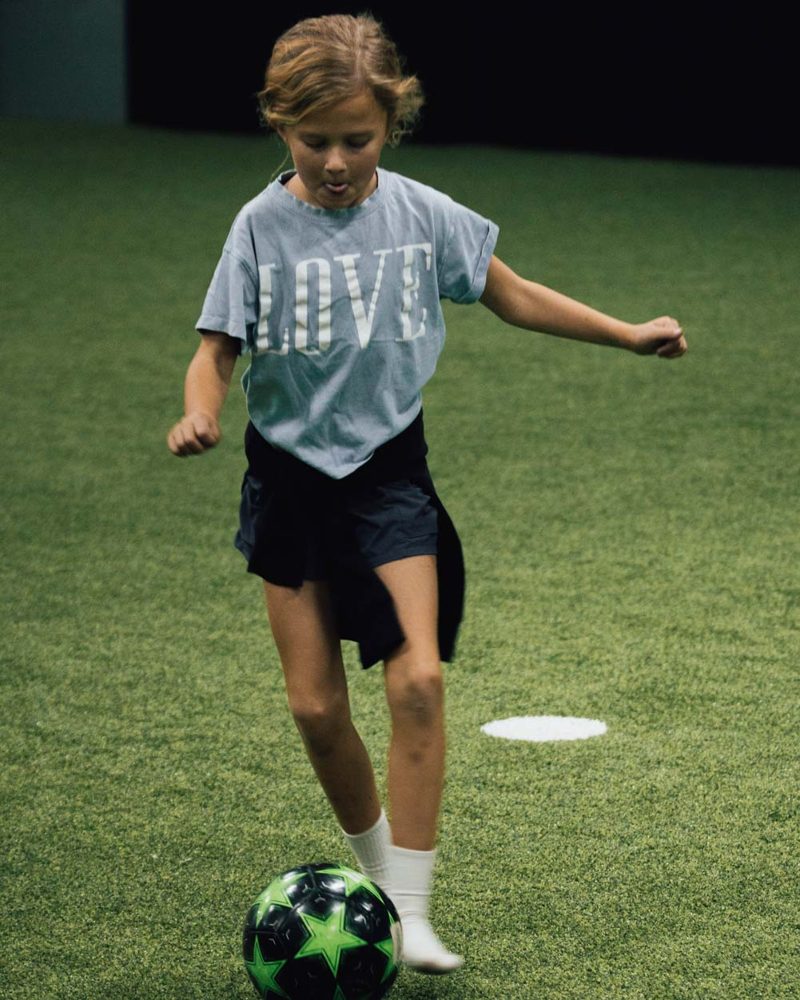
Ages 10 to 12: where private training pays off
Ages 10 to 12 are the sweet spot for private soccer training. By now, as the AAP outlines, most kids have both the motor skills and the cognitive ability to handle complex movement, teamwork, and strategy, which means a coach can finally teach the finer details and have them stick. This is when one-on-one work stops being cute and starts being genuinely developmental.
In a team practice, your child might get a few dozen real touches on the ball in an hour, sharing coach attention with fifteen other kids. In a focused private session, every rep, every correction, and every touch is theirs. That difference compounds fast. A trainer can pick apart a player's shooting mechanics, teach them to shield and turn under pressure, and build the habits that separate a solid player from a standout. If your child is serious about making a stronger team or standing out at tryouts, this is the age where structured private soccer training turns effort into visible results.
Not sure where your player stands?
A free assessment at Prestige Indoor Sports shows you exactly what to work on next.
The teenage years (13 and up): position, speed, and college prep
For teenagers, private training shifts from general skill-building to sharpening a specific edge: position-specific technique, speed and agility, finishing, or preparing for high school and college-level competition. This is the stage where focused specialization finally makes sense, the very thing you avoided at age eight.
A serious fifteen-year-old center back needs different work than a winger chasing recruiting attention. Private and small-group sessions can target exactly that: explosive first steps, one-on-one defending, aerial duels, or the fitness to last a full ninety minutes. Speed and agility work becomes a real difference-maker here, because college scouts notice how fast a player closes down and recovers. Summer is prime time to stack focused reps, which is why so many older players use intensive youth soccer camps to level up between seasons. In Kansas City that climate-controlled indoor turf matters too, since training never stops for heat, storms, or cold. The players who break through in their teens are usually the ones who paired good coaching with their own hunger to improve.
It is about readiness, not a birthday
The single best predictor of whether private training will help is not age, it is readiness. A child who is developmentally and emotionally ready will soak up coaching at almost any age past the early years. One who is not will grind through it and quietly start to resent the sport.
Here are the signals we look for. Your child asks to practice more, rather than being dragged to it. They watch soccer on their own and try to copy what they see. They get frustrated when they cannot do something, and they want to fix it. They can stay focused on a task for twenty minutes or more. And most telling of all, they still light up when it is time to play. When you see those signs, the exact birthday matters a whole lot less.
Coach's tip: If your child never asks to train and only goes because you signed them up, hold off on private lessons. Build the love for the game first with fun, low-pressure play, and the skills come quickly once the desire is real.
Is your child ready for private soccer lessons?
Readiness beats the birthday. Pick an age group and tick the signals you already see. Some answers are not yet, and that is a good answer.
Pick an age group and tick any signals you see. Readiness matters more than the birthday, and the answer is sometimes not yet.
One-on-one private training
Focused coaching that targets your player's specific weak spots, one touch at a time.
Explore private training →Youth soccer camps
Stack focused reps and level up between seasons on climate-controlled indoor turf.
See camp options →Key takeaways
- There is no single starting age. Ages 10 to 12 are when private soccer lessons tend to pay off the most.
- Before age 7, prioritize free play and coordination over formal one-on-one lessons.
- Ages 7 to 9: group training first, with occasional private sessions to fix one specific skill, plus a second sport.
- Teens use private work for position-specific skills, speed and agility, and college prep.
- Readiness beats age: a motivated, coachable kid who wants extra touches is ready, whatever the birthday says.
Frequently Asked Questions
What is the best age to start private soccer training?
There is no single best age, but most children get the biggest benefit from private soccer training between ages 10 and 12. That is when their coordination, focus, and understanding of the game are developed enough for detailed coaching to stick. Motivated younger players around 7 to 9 can still gain from occasional sessions aimed at one specific skill.
Can a 5 or 6 year old take private soccer lessons?
They can, but it is usually not the best use of the time. Before age 7, most kids benefit far more from free play, small-sided games, and simply falling in love with the ball than from structured one-on-one drills. Build coordination and enjoyment first, and save formal private training for when they are a little older and asking for it.
How do I know if my child is ready for private soccer training?
Look for readiness signals rather than a specific age. A ready child asks to practice more, watches and imitates soccer on their own, wants to fix their mistakes, can focus for twenty minutes or more, and still enjoys playing. If they only train because you push them, wait a while and keep it fun for now.
Is private soccer training better than team practice?
They do different jobs, and the best players use both. Team practice teaches game situations, teamwork, and competition, while private training gives your child far more touches and individual correction on specific skills. Think of private sessions as a supplement that accelerates development, not a replacement for playing with a team.
How often should a young player do private soccer training?
For most kids, one focused private session a week alongside regular team play is plenty, especially in the 10 to 12 range. The goal is quality, not volume, and young athletes still need rest days and time for other activities. A coach at Prestige Indoor Sports can help set a schedule that fits your child's age, goals, and how much they are enjoying it.
More from the blog: how to choose a youth soccer trainer in Overland Park. See also: are private soccer lessons worth it for your child? See also: building confidence before building skill.
See also: should your child play up in youth soccer? A Kansas City guide. See also: what position your child should play in soccer, by age, in Overland Park.
Prestige Indoor Sports | Kansas City Metro Area | (913) 568-8145 | 7373 W 107th St, Overland Park, KS 66212
Ready to Get Started at Prestige Indoor Sports?
Book a free assessment with a Johnson County coach and put a real plan behind your player's development.