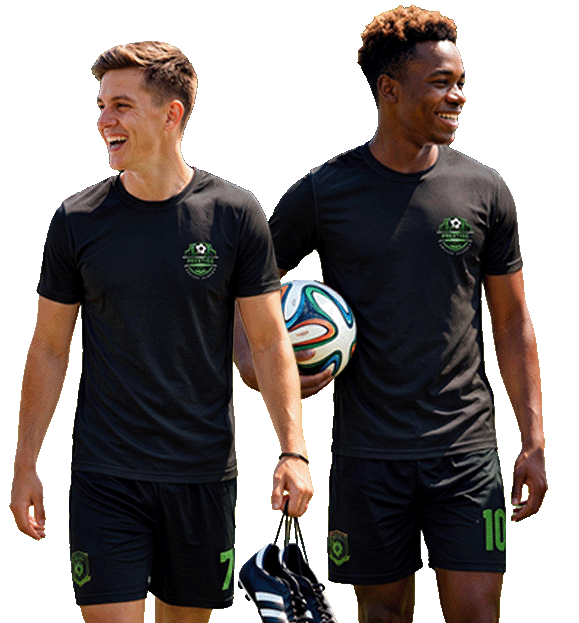
Picture two soccer sessions running at the same time on the same turf. In the first, a kid barely touches the ball all hour, most of it spent standing in a line or chasing loose balls while a guy with a whistle scrolls his phone. In the second, that same hour is full of touches, quick corrections, and a clear reason behind every drill. Same hour, wildly different player.
That gap is the entire point of hiring a private trainer. A great one speeds up your child's development in ways a crowded team practice simply cannot. A weak one is a babysitter with cones. Here is how to tell them apart before you commit your time and money, whether you are searching in Overland Park or anywhere across the Kansas City metro.
The short answer: to choose a good youth soccer trainer, look past the sales pitch and judge four things. How many real touches your child gets each session, whether the trainer gives specific corrections instead of vague praise, whether sessions follow a plan built around your player, and whether they carry current SafeSport training and a background check. Then watch one session before you sign up.
What separates a great trainer from a babysitter with cones
Start with one test: does your child leave the session a measurably better player than they walked in? A great trainer engineers that on purpose, and it shows up in four places.
The first is volume of quality touches. Development in soccer is built on repetition, so the best sessions are relentless. Your child should barely stop moving, cycling through drill after drill with the ball at their feet. If the hour is half instruction and half waiting, you are paying for a lecture, not training.
The second is the quality of feedback. Weak coaches praise everything. Strong coaches correct constantly and specifically, telling your player to open their hips, take the first touch across their body, or check their shoulder before they receive. That running stream of small corrections is where real improvement lives.
The third is a plan. A trainer worth hiring assesses your child, identifies the two or three things holding them back, and builds sessions around fixing them. There is a thread from week to week. A babysitter with cones runs the same generic warmup and scrimmage no matter who shows up.
The fourth is standards paired with enjoyment. The best trainers push kids past what they think they can do while keeping the session one they actually want to come back to. Hard and fun are not opposites.
The questions to ask before you book a trainer
Before you hand over a single session, ask five questions, and pay as much attention to how the trainer answers as to what they say. A confident, experienced coach welcomes every one of these. Someone dodging them is telling you something.
Ask what their specific plan is for your child and how they will measure progress. You want details, not "we work on everything." A real trainer talks about assessing your player first, then setting a couple of clear targets. Ask whether you can watch a session before you commit, and expect an easy yes. Any trainer who will not let a parent observe is a hard pass.
Ask about credentials directly, including current SafeSport training and a background check, because those are not optional for anyone working with kids. Ask them to connect you with two or three families they currently train, since real results come with real references. And ask who is actually running the sessions, because at bigger operations the person in the ad is not always the coach on the field. You can usually get a feel for a staff before you ever visit by looking at a page like our coaches page, then meeting the person who will run your child's sessions in person.
Coach's tip: After a trial session, ask the trainer to name your child's single biggest weakness and how they plan to fix it. A real coach points to something specific. A babysitter with cones just says, "Great job, see you next week."
Not sure what to ask a trainer? Start with a real assessment.
We evaluate your player first, then show you exactly what we would work on and why.
Red flags that should make you walk away
Some warning signs are worth ending the conversation over. If you spot any of these, keep looking.
Be very wary of guarantees. Any trainer promising a scholarship, a certain number of goals, or a guaranteed spot on a top team is selling you a fantasy, because development does not run on a schedule anyone can promise. Watch, too, for a total lack of assessment. If a trainer runs the identical session for a six-year-old and a fourteen-year-old, there is no individual plan, just a template.
A refusal to let you watch, or a pattern of discouraging parents from being involved at all, is a serious flag. Vague or missing credentials are another. A trainer who cannot or will not show current SafeSport training and a background check should be an automatic no, and you can learn exactly what that safety standard covers through the U.S. Center for SafeSport. Finally, be skeptical of all flash and no fundamentals. A field covered in expensive gadgets for one kid, or a session built mostly around filming clips for social media, usually hides a thin coaching foundation.
Credentials versus results: what actually matters
Credentials are the floor, not the ceiling. Two things are non-negotiable: current SafeSport abuse-prevention training and a clean, current background check. These protect your child and are standard for any legitimate youth coach, so confirm them first and move on if they are missing.
Beyond that baseline, coaching licenses through bodies like US Youth Soccer or US Soccer are a genuine plus, because they show a trainer has studied how to teach the game, not just play it. But a license is not the same as results. The trainers who change players are the ones who can point to kids who got measurably better under them, and who understand the mental side of development as much as the technical. Groups like the Positive Coaching Alliance have spent years showing that how a coach builds confidence and character matters as much as the drills. So weigh both. Verify the safety basics, then judge the trainer on the players they have developed and on how your own child responds to them.
How to judge the first session
The first session tells you almost everything. A good one follows a clear arc: a quick assessment, a lot of focused ball work, constant specific feedback, and a short debrief where the trainer tells you what they saw and what comes next.
Your child should be sweating and challenged, getting corrected often, and still smiling when it ends. By that point the trainer should be able to describe your player's strengths, the main thing to fix, and a simple plan to fix it. That is a professional at work. A weak first session looks like a generic warmup, an aimless scrimmage or some casual shooting, and a friendly goodbye with no assessment and no plan. If you leave knowing nothing new about your child as a player, that is your answer.
Is this trainer worth your child's time?
Tick what you have confirmed, in two steps: the safety basics first, then what you saw in a session. The result is honest, including when you may not need a trainer at all.
Tick only what you have confirmed yourself, not what the trainer promised. The result changes as you go.
One-on-one private training
Focused sessions built around your player's specific gaps.
See private training →Soccer skills training
Small-group work that keeps the touches high and the feedback specific.
Explore skills training →Watch a session before you decide.
Come see a focused private session on our indoor turf and judge it for yourself.
Choosing a youth soccer trainer in Overland Park
If you are looking close to home, the Kansas City metro has plenty of options, and the same rules apply from Olathe to Leawood to Prairie Village. Judge the touches, the feedback, the plan, and the credentials, then go watch a session before you decide.
One local factor is worth weighing on its own: the setting. Outdoor sessions get canceled by Kansas heat, thunderstorms, and January cold, and every skipped week quietly eats into your child's development. Training on climate-controlled indoor turf means the plan actually runs, week after week, no matter the weather. That is the model we built at Prestige Indoor Sports on West 107th Street in Overland Park. Our coaches assess each player, keep the touches high, and build sessions around what an individual kid needs, all indoors so the weather never breaks the routine. The best way to judge any trainer, us included, is to watch one, so book a free assessment on our training request page and see a session for yourself.
Key takeaways
- Judge a trainer on quality touches, specific feedback, an individual plan, and safety credentials, not on their sales pitch.
- Always watch a session before you commit, and treat any refusal to let you observe as a dealbreaker.
- Non-negotiables are current SafeSport training and a background check. Coaching licenses and a track record of improved players are the difference-makers on top.
- Walk away from guarantees, one-size-fits-all sessions, and all-flash, no-fundamentals setups.
- On indoor turf, weather never cancels the plan, so your child's development stays consistent week to week.
Frequently Asked Questions
What should I ask a private soccer trainer before signing up?
Ask what their specific plan is for your child and how they will measure progress, whether you can watch a session first, and what their credentials are, including current SafeSport training and a background check. Ask them to connect you with two or three current families for references. How openly a trainer answers these tells you as much as the answers themselves.
How can I tell if a youth soccer trainer is actually good?
Watch one session and look for three things: your child gets a high volume of ball touches, the trainer gives constant specific corrections rather than blanket praise, and the sessions follow a plan built around your player. A good trainer can also name your child's main weakness and how they will fix it. If your kid leaves better than they arrived, that is your proof.
What credentials should a youth soccer coach have?
At a minimum, a youth soccer coach should hold current SafeSport abuse-prevention training and a clean background check, which are standard safeguards for anyone working with kids. Coaching licenses through US Youth Soccer or US Soccer are a strong bonus because they show formal training in how to teach the game. Beyond the paperwork, the best signal is a real track record of players who improved under them.
Is private soccer training worth it for young players?
For most committed players, yes, because one focused private session can deliver more real development than several crowded team practices. The value comes from the individual attention and the sheer number of quality touches, not from simply adding more hours. It is most worth it when the trainer assesses your child and builds a specific plan, and least worth it when the sessions are generic. Judge the fit by watching a session first.
How much does private soccer training cost?
Rates vary widely by trainer experience, session length, and whether it is one-on-one or small group, so ask for the full structure before you compare. Do not choose on price alone. A cheaper trainer who parks kids in drill lines can cost you more in wasted time than a focused coach who develops your player every session. Weigh the value of the touches and coaching, not just the rate.
More from the blog: what age kids should start private soccer training. See also: how to build confidence in a young soccer player. See also: are private soccer lessons worth it for your child?
Ready to Get Started at Prestige Indoor Sports?
Book a free assessment with a Johnson County coach and put a real plan behind your player's development.