
The last outdoor game wraps up in early November. The next real one is not until March. For a lot of Kansas City kids, that gap is four to five months where soccer simply goes quiet, right along with the weather.
Here is what most parents do not see coming. A player who takes the whole winter off does not just hit pause. They slide backward, then spend February and March clawing back ground they already owned in October. It does not have to go that way, and this is the plan that keeps a young player moving forward through the cold instead.
So where can kids train soccer in the winter in Kansas City? At a climate-controlled indoor facility like Prestige Indoor Sports in Overland Park, which serves the wider Kansas City metro and Johnson County. Winter indoor soccer training Kansas City families count on keeps first touch, speed, and confidence sharp with steady weekly sessions while the outdoor fields sit frozen.
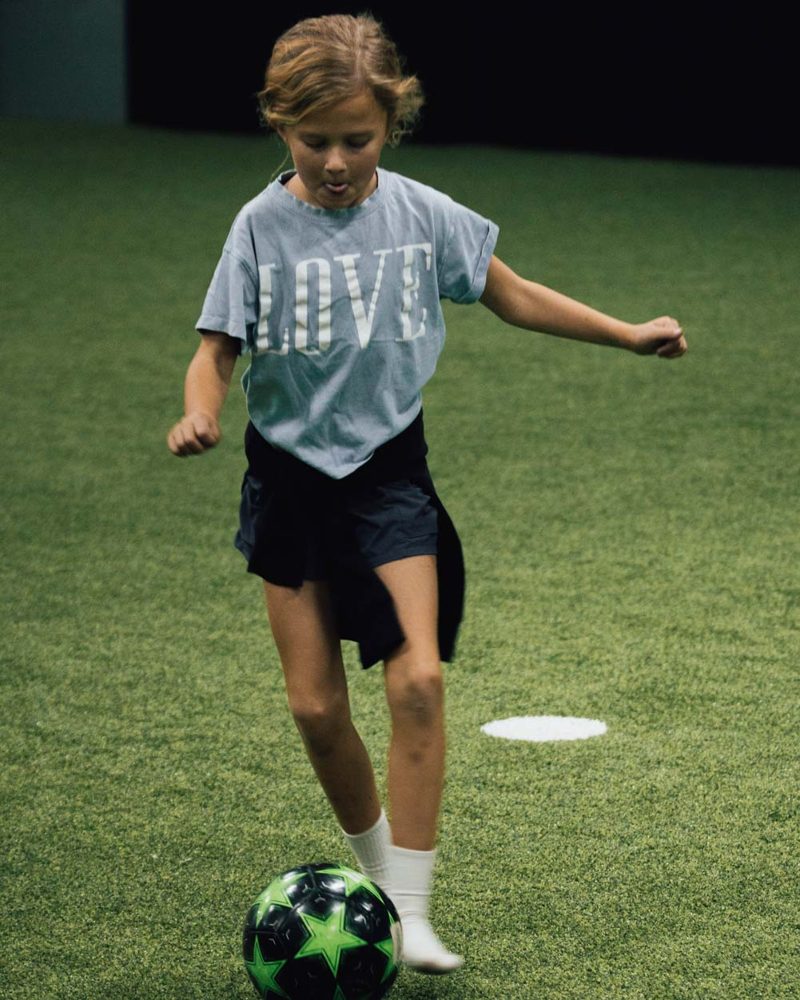
Does taking the whole winter off actually hurt your player?
Yes, and faster than most families expect. Sports medicine has a name for it, detraining, and it starts within a couple of weeks of stopping. Ball feel and first touch go first, because touch is a fine motor skill that only holds up with constant reps. Reaction speed and quickness dull next. Then match confidence quietly erodes, because a kid who has not competed in months walks into spring a half step behind and knows it.
The good news is that detraining is reversible. The bad news is that reversing it burns weeks. A player who sits from November to March does not restart in spring at the level they left. They restart lower, then spend the early season rebuilding skills they already had in the fall while the rest of the league catches up. Every week spent rebuilding is a week not spent improving, and by the time tryouts and the spring schedule arrive, that lost time is impossible to fake.
The separation season nobody talks about
Coaches have a phrase for winter: separation season. It is the stretch of the year where the gap between players opens the widest, precisely because so many kids stop. A player who keeps touching the ball two to three times a week does not just hold steady. They gain ground on everyone who took the season off. The player development guidance from US Youth Soccer is consistent on this point: regular, age-appropriate reps beat occasional bursts every time. Winter is not a throwaway. It is the quietest and most effective time of year to get better.
Coach's tip: Never let the ball go cold. Even ten minutes a day against a garage wall, working first touch and both feet, is enough to keep the sharpest skill from slipping. The kid who touches the ball daily is the one who looks a level up when spring starts.
What a winter indoor soccer training plan actually looks like
A good winter plan is not about grinding your kid into the ground. It is two to three focused sessions a week, sixty to ninety minutes each, that protect the things that fade fastest: touch, quickness, and fitness. That is enough to hold a young player's edge through the whole off-season, and for a lot of kids it is enough to sharpen it. The structure matters far more than the hours.
A week that keeps a young player sharp
Here is the rhythm we build for winter athletes. One technical session focused on first touch, dribbling, and finishing in tight space, which is exactly where indoor turf shines. One speed and agility session for change of direction and first-step quickness, the qualities coaches read in the opening minutes. Add a small-sided or private session when the calendar allows, so decisions stay fast under real pressure. Between sessions, ten minutes of ball work at home keeps the touch from ever going cold. Then one genuine rest day, because recovery is where the work actually sets in. That is it. Simple, repeatable, and built to survive a busy family schedule. Our indoor soccer training in Overland Park is set up around exactly this kind of weekly rhythm.
How big is your player's off-season gap?
Slide to the number of weeks until your player's next real game. The plan changes with the gap, and sometimes the honest answer is that you do not need one.
Slide to the length of your player's gap to see what the winter should look like.
Want a winter plan built around your player?
Tell us their age and where they play. We will map the right off-season rhythm to keep them sharp.
Why indoor beats losing four to five months
Indoor training removes the two things that wreck winter consistency: weather and daylight. There are no sessions canceled for snow, ice, single-digit windchills, or a five o'clock sunset. The turf is the same every visit, and the building is warm. That reliability is the whole game, because a plan only works if it actually happens, week after week, for months. In a Kansas City winter, a weatherproof home base is the difference between a real plan and a good intention.
There is a second, quieter advantage. Indoor spaces are smaller, so players touch the ball far more often per minute than they ever would on a full outdoor field. More touches means faster skill development, tighter dribbling, and quicker decisions in crowded areas. Youth sports research from the Aspen Institute's Project Play makes the broader case plainly: kids who stay engaged in quality activity through the year get more out of the sport and are far more likely to keep playing it. A warm, reliable place to train is how you keep a young player engaged when everything outside says stay home.
Indoor training in Overland Park
Climate-controlled turf so winter sessions never cancel for weather.
Indoor training →Where kids can train soccer this winter in Kansas City
Families across the metro have a few winter options, and they are not the same. Rec and futsal leagues give kids games, which is great for touches and fun but light on individual coaching. Dedicated skill training builds the actual player: the first touch, the quickness, the decisions under pressure. The strongest winters usually blend a little of both. For focused development, our indoor soccer training in Kansas City is built for exactly this stretch of the calendar, and our Overland Park facility puts it within an easy drive for families in Olathe, Lenexa, Leawood, Shawnee, and Prairie Village.
The choice is really about what you want out of the off-season. If the goal is simply to keep kids moving and having fun, a rec league does the job. If the goal is to walk into spring ahead of where they left off in the fall, that takes intentional, coached reps on the specific things that slip. Most parents who come to us want the second thing, and winter is the ideal window to get it.
Do not let the off-season decide your season.
A free assessment shows you exactly where your player stands and what winter should look like.
Key takeaways
- A young player who takes the whole winter off loses touch, quickness, and confidence within weeks, then burns the early spring rebuilding what they already had.
- Two to three focused sessions a week, plus a few minutes of daily ball work at home, are enough to hold and often sharpen a player's edge.
- Winter is separation season: the gap between players opens widest because most kids stop, so steady off-season work pays off the most.
- Indoor training removes weather and daylight as excuses, and the smaller space means more touches per minute and faster skill growth.
- In the Kansas City metro, pair a rec or futsal league for games with focused indoor skill training for real, measurable development.
Frequently Asked Questions
Where can kids train soccer in the winter in Kansas City?
Kids can train year round at a climate-controlled indoor facility like Prestige Indoor Sports in Overland Park, which serves the Kansas City metro and Johnson County. The metro also has indoor rec and futsal leagues that provide games. Leagues are great for touches and fun, while focused indoor training builds the individual player's touch, speed, and decisions. Many families combine both through the winter.
Does taking the winter off hurt a young soccer player's skills?
Yes. Within a couple of weeks of stopping, first touch and ball feel fade, followed by reaction speed and match confidence. This is called detraining. It is reversible, but a player who sits from November to March restarts below where they left off and spends the early spring rebuilding instead of improving. Steady off-season reps prevent that slide.
How often should my kid train during the winter off-season?
Two to three focused sessions a week, sixty to ninety minutes each, is plenty to keep a young player sharp through the off-season. A good week mixes one technical session, one speed and agility session, and an optional small-sided or private session, plus a few minutes of daily ball work at home and one real rest day. Consistency matters more than long hours.
Is indoor winter soccer training better than taking the season off?
For development, yes. Indoor training removes weather and short daylight as reasons to cancel, so a plan actually happens week after week. The smaller playing space also means more touches per minute, which speeds up dribbling, first touch, and quick decisions. A player who trains indoors through winter almost always arrives in spring ahead of a teammate who rested.
Where is Prestige Indoor Sports, and how do we get started this winter?
Our facility is at 7373 W 107th St, Overland Park, KS 66212, in the heart of Johnson County and an easy drive from Olathe, Lenexa, Leawood, Shawnee, and Prairie Village. You can reach us at (913) 568-8145 or book a free assessment through our contact page. We will map a winter plan around your player's age, level, and spring goals.
More from the blog: ten minutes of first touch work at home. See also: how often youth soccer players should train.
See also: how cold is too cold for kids' soccer practice in Overland Park.
Prestige Indoor Sports | Kansas City Metro Area | (913) 568-8145 | 7373 W 107th St, Overland Park, KS 66212
Ready to Get Started at Prestige Indoor Sports?
Book a free assessment with a Johnson County coach and put a real plan behind your player's development.