
Quick answer
For kids' soccer practice in Overland Park, U.S. Soccer's guide calls a wind chill above 30°F normal play, asks for extra clothing and warm-up breaks from 24°F down, and says to cancel or move indoors below 0°F. The American Academy of Pediatrics says to avoid outdoor play below -15°F. Your club's own policy comes first.
It is dark, the wind is up, and the group chat has one question in it: is practice still on? Nobody wants to send a nine-year-old out in the wrong jacket, and nobody wants to cancel for nothing.
So how cold is too cold for kids' soccer practice in Overland Park? There is a real answer, and it is not a single number. It is the wind chill, the alert level it lands in, then your club's own rule. Prestige Indoor Sports trains kids in a climate-controlled building here in Overland Park, so we are not the ones standing in the wind. This guide is for the parents who are.
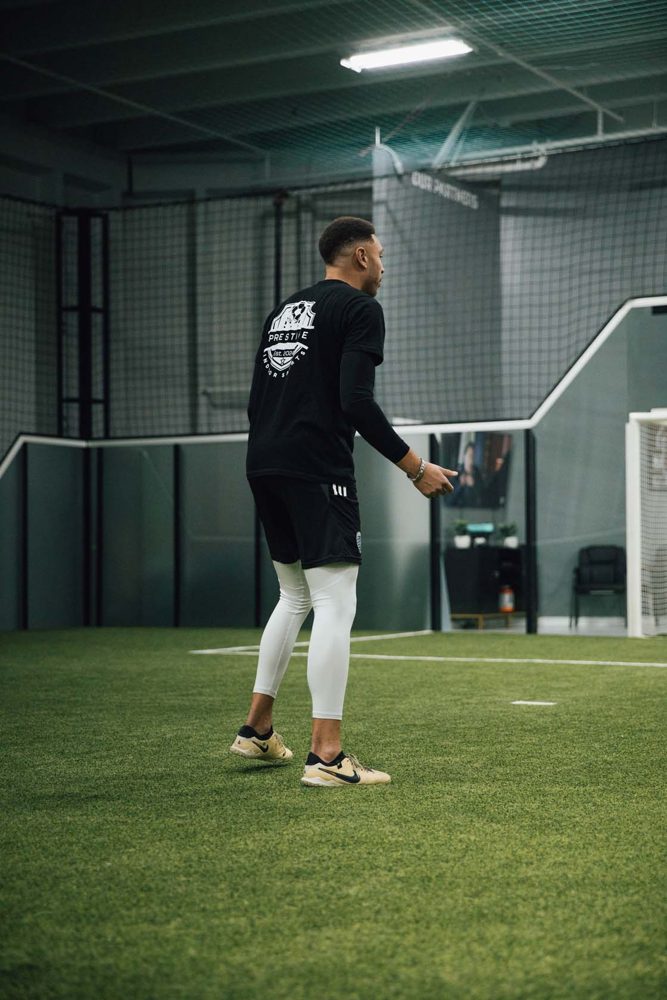
How cold is too cold for kids' soccer practice?
Too cold is a wind chill below 0°F. That is where U.S. Soccer's cold weather guide says to cancel or try to move activities indoors. From 1°F to 15°F it says to consider modifying the session and allow more chances to rewarm. Above 30°F it calls conditions good.
The American Academy of Pediatrics draws a harder line. Its winter safety page says playing outside in temperatures or wind chills below -15°F should be avoided, because exposed skin begins to freeze within minutes.
Neither number replaces your club's rule. U.S. Soccer says its guide is not a substitute for medical care, and that a player from Minnesota will have a much different threshold for cold than a player from Florida.
The five U.S. Soccer alert levels, in plain English
U.S. Soccer sorts every mix of temperature and wind into five colors, using the wind chill: what the air feels like on skin, not what the thermometer reads.
| Alert level | Wind chill | What U.S. Soccer says | At practice |
|---|---|---|---|
| Green | Above 30°F | Good conditions. Normal activities. | Play in layers. |
| Yellow | 25°F to 30°F | Less than ideal. Be aware of cold injury. | Play, and check cold hands and ears. |
| Orange | 16°F to 24°F | Moderate risk. Extra clothing, cover exposed skin, chances to rewarm. | Play with warm-up breaks. |
| Red | 1°F to 15°F | High risk. Consider modifying activity to limit exposure. | Shorten it or move indoors. |
| Black | Below 0°F | Extreme. Cancel or attempt to move indoors. | Cancel or move indoors. |
The chart prints black as below 0°F and red as 1°F to 15°F, so 0°F itself is not listed. Use the stricter call. Its footnote matters on a rainy or snowy night: in wet environments with colder conditions, U.S. Soccer says these risks are accelerated.
Why wind chill, not the thermometer, sets the line
Wind chill is how cold people feel outside, and the National Weather Service defines it only for air at or below 50°F with wind above 3 mph. Take a 30°F evening. At 5 mph it feels like 25°F, which is yellow. At 10 mph it feels like 21°F, which is orange. At 30 mph it feels like 15°F, which is red. Same thermometer, three alert levels.
Two more National Weather Service facts. Bright sunshine can raise the wind chill by 10°F to 18°F, and the chart assumes no sun. And frostbite needs the actual air temperature near the skin to be below freezing, so wind chill alone cannot cause it above 32°F. That does not make a windy 40°F night risk-free: U.S. Soccer says wet and damp conditions add to the risk of injury or illness in the cold.
Should practice go ahead tonight? A ten-second check
Set tonight's air temperature and wind, say whether it is wet, and the tool runs the National Weather Service formula U.S. Soccer prints in its guide. You get the alert level and a plain next step, including the answer that you do not need to go anywhere.
Is it too cold for practice tonight?
Move the sliders to tonight's air temperature and wind. The result uses U.S. Soccer's five alert levels, and it will tell you to play on when that is the honest answer.
Conditions
This tool needs JavaScript. The alert table above gives the same answer.
What a Kansas City winter does to practice in Overland Park
Cold evenings are routine in this part of the metro, and a winter afternoon and the same night can sit far apart. NOAA's 1991 to 2020 climate normals for Kansas City International Airport put January's normal high at 38.4°F and its normal low at 19.5°F. They count 27.3 nights a month at or below freezing in January, 24.6 in December and 22.0 in February. Even November (13.3) and March (13.9) have them.
Put those next to the chart. A 40°F afternoon with a 10 mph wind feels like 34°F, which is green. A 20°F evening with the same wind feels like 9°F, which is red. A practice that starts after school and runs after dark can slide from one to the other, so check the wind chill for the hour your child will actually be outside.
Prestige Indoor Sports trains at 7373 West 107th Street in Overland Park. The building is climate-controlled and runs training 12 months a year with no weather cancellations, a simple plan B on a red or black night. See our indoor soccer training in Overland Park, or where kids can train soccer through a Kansas City winter.
What clubs decide for themselves, and why yours wins
Clubs set their own cold-weather lines, and they do not agree.
| Organization | Where the line sits |
|---|---|
| U.S. Soccer cold weather guide | Wind chill below 0°F: cancel or attempt to move activities indoors. |
| One Knoxville Sporting Club | Wind chill below 20°F: all outdoor team training canceled, every age group. |
| Charlotte Soccer Academy | "Feels like" 30°F or below: practice canceled club-wide. At 31°F to 32°F, canceled for 12U and younger. |
| West Side Alliance Soccer Club | Ages 11 to 19: cancel below 0°F. Sessions for 10U and younger canceled at 25°F to 30°F. Academy practices (ages 4 to 10) canceled unless wind chill is above 40°F. |
| American Academy of Pediatrics | Temperatures or wind chills below -15°F: avoid outdoor play. |
Two of the three clubs draw a stricter line for younger kids. Do not copy these numbers. Ask your own club for its weather policy in writing and treat it as the rule. If it has none, U.S. Soccer's alert levels are a sensible default.
Want a warm place to train all winter?
Tell us your player's goals. A Prestige coach will reach out to help you get started. No payment now.
What kids should wear to cold-weather practice
U.S. Soccer recommends three layers, and the AAP agrees that several thin layers keep kids warm and dry. Build from the skin out.
- Inner layer. A wicking layer in wool or polyester that moves sweat away from the skin.
- Middle layer. An insulating layer in fleece or wool that holds warmth.
- Outer layer. A water and wind proof shell.
- Head, hands and feet. A hat or headband, gloves or mittens and warm socks. The AAP also lists insulated boots.
- A dry spare set. U.S. Soccer says to replace wet clothing with dry, and the AAP says to change out of wet clothes right away. Pack spare socks, gloves and a hat.
Two smaller rules from U.S. Soccer: do not overdress, because layers come off as kids warm up, and avoid sweating before going outside, because the body then cools too quickly. It also suggests warm water in the bottle so it does not freeze, since cold can make dehydration harder to notice.
Signs your child needs to come in now
Frostbite means skin and tissue actually begin freezing. U.S. Soccer lists numbness, tingling or stinging, pale or bluish skin, swelling and blisters, most often on the nose, ears, cheeks, chin, fingers and toes. Hypothermia is a drop in internal body temperature to 95°F or less. It typically begins with intense cold, shivering and a child who is quieter and more disengaged than normal, then confusion, sleepiness and slurred speech.
Get the child to a warm place. For frostbite, rewarm gradually with warm (not hot) water and do not rub the area. For suspected hypothermia, remove damp clothing, warm the center of the body first and call for medical help or 911. U.S. Soccer also says to pick a nearby warming spot before practice starts.
Myth
If the air is above freezing, wind and cold cannot hurt a child.
Fact
Frostbite needs air below freezing, but U.S. Soccer says wet and damp conditions add to the risk of injury or illness in the cold. Wind plus wet clothes is the combination to respect.
When moving practice indoors is the easy call
Indoors is the easy call when the tool says red or black, or when the night is both wet and windy. It is not needed on green or yellow, and outdoor play has value: the AAP notes it is one way kids get the 60 minutes of daily exercise they need.
Camps, group training, private sessions and team training all run at Prestige's indoor facility. If you are looking for indoor soccer near you, see indoor soccer in Kansas City, or our guide to indoor soccer rules for kids if your child is about to try the indoor game.
Key takeaways
- Wind chill sets the line. U.S. Soccer says cancel or move indoors below 0°F, and the AAP says avoid outdoor play below -15°F.
- Above 24°F, kids can practice outside in layers. From 16°F to 24°F, add covered skin and warm-up breaks.
- Clubs set their own lines, and younger kids often get stricter ones. Ask yours in writing.
- Three thin layers and a dry spare set beat one big coat.
- In Overland Park, a January afternoon can run green and the same night red.
Frequently asked questions
What temperature should you cancel soccer practice?
There is no single national number. U.S. Soccer says to cancel or try to move indoors when the wind chill is below 0°F, and the American Academy of Pediatrics says to avoid outdoor play below -15°F. Many clubs set a stricter line, especially for younger players, so check your club's policy first.
Is it okay for kids to play soccer in 30 degree weather?
Usually yes, with the right clothes. U.S. Soccer treats a wind chill of 25°F to 30°F as less than ideal but playable. A 30°F evening with a 10 mph wind feels like 21°F, which is orange, so add layers, cover exposed skin and plan warm-up breaks.
Can kids practice soccer in the rain or snow when it is cold?
Wet conditions raise the stakes. U.S. Soccer says wet and damp conditions add to the risk of injury or illness in the cold, and tells coaches to replace wet clothing with dry. Bring spare socks, gloves and a hat, and use extra caution.
What should kids wear to soccer practice in cold weather?
Three thin layers: a wicking base layer, an insulating middle layer such as fleece or wool, and a water and wind proof shell, plus a hat, gloves and warm socks. Pack a dry spare set. Do not overdress, because layers come off as kids warm up.
Where can kids practice soccer in Overland Park when it is too cold outside?
Prestige Indoor Sports trains at 7373 West 107th Street in Overland Park, in a climate-controlled facility that runs training 12 months a year with no weather cancellations. See our indoor soccer training in Overland Park.
Keep reading
Indoor Soccer Training in Overland Park
Climate-controlled turf, so your player's training never cancels for weather.
See indoor training →Winter Indoor Soccer Training in Kansas City
A weekly rhythm that keeps a young player sharp while the fields are frozen.
Read the guide →How to Prevent Soccer Injuries in Youth Players
Warm-ups, rest and the early signs of too much.
Read the guide →Rather train somewhere warm?
Prestige trains indoors in Overland Park all year. Tell us your player's goals and a coach will reach out to help you get started. No payment now.