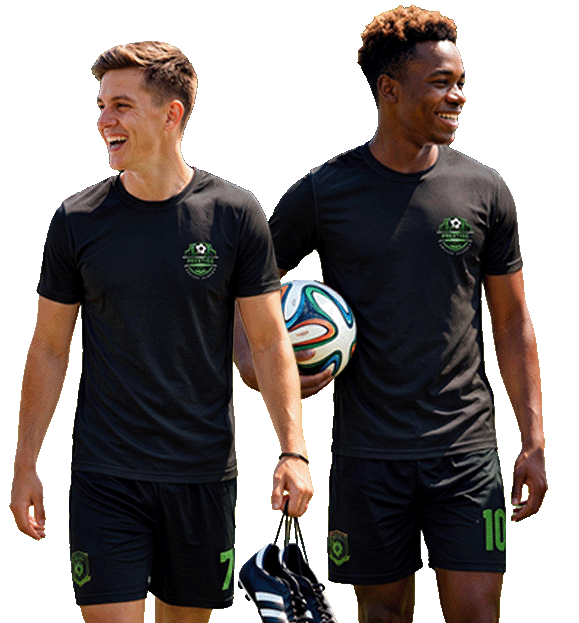
Watch any soccer tryout closely and you will notice something. The head coach is not timing sprints in the first five minutes. They are watching what each kid does with the very first ball played to their feet. Does it settle and stick, or does it bounce three yards away and send them chasing? That single moment, the first touch, tells an experienced coach more than a highlight reel ever could.
First touch is the most repeated skill in the entire game, and it is the one that separates the player who always looks calm from the one who always looks rushed. It is also, thankfully, one of the most trainable skills there is. Below is what a genuinely good first touch looks like, and the exact way your young player can build one.
To improve your first touch in soccer, practice receiving the ball with a soft, cushioned surface that kills its speed, then steer that same touch into space away from pressure. Do 10 to 15 focused minutes a day of wall passes, juggling, and half-turn receiving, and always know your next move before the ball arrives.
What makes a first touch actually good?
A good first touch does three jobs at the same time. It cushions the ball to kill its speed, it steers the ball into space rather than straight down at the feet, and it sets up the next play before the player has even looked up. Miss any one of those and the touch is only half done.
Cushion comes first. The instinct of a nervous player is to stab at the ball with a stiff, locked foot, which is exactly why it ricochets away. A relaxed foot that gives a little as the ball meets it absorbs the pace, almost like catching an egg. Coaches often put it simply: receive the ball, do not stop it. You are guiding its energy, not blocking it.
Direction is what turns a safe touch into a dangerous one. A great first touch does not just trap the ball dead. It pushes the ball a yard or two into open space, in the direction the player already wants to go, so the next step is forward instead of sideways. That is why the best players always seem to have so much time. They bought it with one touch.
The third piece is the one young players skip. Your first touch is really your first pass. Before the ball even arrives, good players have already glanced over a shoulder, seen where the pressure is, and decided where the ball needs to go. The touch simply carries out a plan that was made a half second earlier.
Coach's tip: Teach your player to take a quick look over both shoulders before the ball reaches them. Knowing where the defender is before you receive is what lets your first touch go the right way instead of into trouble.
Why coaches notice your first touch first
Coaches read first touch before almost anything else because it reveals how a player thinks under pressure, not just how skilled their feet are. A heavy touch in a tight space gives the ball away. A clean, directional touch keeps possession and opens the next chance. Over the course of a game, those small moments quietly decide the result.
This is why serious player development puts ball control near the center of technical training from a young age. National bodies like US Youth Soccer build their coaching resources around receiving, controlling, and playing the ball cleanly long before anything flashy. The unglamorous skill is the foundation everything else stands on.
It also compounds. A player with a reliable first touch gets passed to more often, because teammates trust the ball will not be wasted. More touches means faster development, so first touch is quietly one of the highest-leverage things a young player can work on.
The best drills to improve your first touch
The fastest way to a better first touch is focused, repeated receiving under slightly game-like conditions. You do not need fancy equipment or a full field. A ball, a wall, and 10 to 15 mindful minutes a day will do more than an hour of aimless kicking. Here are the four drills we lean on most.
1. Wall passes with a controlled rebound
This is the single most valuable solo first-touch drill there is. Stand a few yards from a solid wall, pass the ball into it, then control the rebound with one soft touch that sets up your next pass. The goal is not power. It is a quiet, cushioned touch that leaves the ball exactly where you want it. Vary the pace and angle so the return is never quite the same, and alternate feet so the weaker side gets equal work.
2. Juggling to soften the feet
Juggling teaches the feather-light contact that good receiving demands. Start with the dominant foot, then force the weaker foot into the mix, then combine both, thighs included. Nobody juggles in a match, but the soft, controlled touch you build carries directly into how gently you can receive a bouncing pass. Keep the ball low and under control rather than chasing a big number.
3. Receiving across your body on the half-turn
This drill builds the direction and next-play parts of first touch at the same time. Instead of receiving square, with the body facing the passer, open your hips so one shoulder points where you want to go. As the ball arrives, let your touch carry it across your body into that open space, so your very next step is already forward. Receiving on the half-turn lets a player see the whole field and advance in one motion, instead of stopping the ball, turning, and losing a beat. Practice it off the wall or with a partner, opening left, then right.
4. First touch under pressure
A touch that is clean in an empty backyard can fall apart with a defender breathing down your neck, so the last step is adding pressure. Have a partner apply light, then heavier, pressure as the ball is played in, forcing quicker decisions and a touch that shields the ball from the challenge. This is where solo work becomes match-ready, the piece most home practice is missing.
Which first touch drill should come next?
The four drills build on each other. Pick where your player is today to get the next step, and an honest answer when they are ready to stop adding drills.
Pick the step that fits. Steady means the ball stays under control within a yard or two, on both feet.
Skills training
Structured sessions that drill receiving, control, and directional touches until they hold up in a real game.
Explore skills training →Private training
One-on-one coaching that pinpoints and fixes the exact first-touch habit holding your player back.
See private training →How many reps does a better first touch actually take?
A better first touch comes from many focused reps, and that is far more reachable than it sounds. First touch improves through mindful repetition, not marathon sessions, so 10 to 15 quality minutes a day beats a rare two-hour grind. A wall hands you a fresh receiving rep on every rebound, with no partner and no waiting around.
Do that most days of the week, on top of team practice, and the reps stack up quickly. Keep it up for a season and the touch that used to skip away starts to stick automatically. The setting you train in matters too, because it decides how many touches you actually get.
Turn loose touches into a weapon
A free assessment shows you exactly which part of your player's first touch to fix first.
Why indoor turf sharpens first touch faster
Indoor turf gives a young player more clean, predictable touches per session than a bumpy outdoor field ever will, and that touch count is what drives improvement. The surface is true and consistent, so a well-struck pass comes back exactly as expected, and the player learns to trust their touch instead of guessing at a bad bounce.
There is a simpler advantage too. In Kansas City, outdoor training stops for summer heat, thunderstorms, winter cold, and poor air quality days. Indoor training does not. That climate-controlled consistency, week after week, is how touch volume actually adds up, and volume is the whole game with first touch. U.S. Soccer's development philosophy leans on frequent, high-quality touches over occasional big sessions, which is exactly what a year-round indoor environment makes possible.
It is also why so many Overland Park and Johnson County families use focused indoor work to supplement their club season, sharpening the technical skills that crowded team practices rarely have time to isolate.
Key takeaways
- A good first touch does three things at once: it cushions the ball, directs it into space, and sets up the next play.
- Relax the receiving surface and guide the ball's energy, rather than stabbing at it with a stiff foot.
- The core drills are wall passes, juggling, half-turn receiving, and receiving under pressure, using both feet.
- First touch is built with mindful reps. Ten to fifteen focused minutes a day beats one long, unfocused session.
- Indoor turf delivers more clean, predictable touches year-round, which is what genuinely moves the skill forward.
Frequently Asked Questions
How can I improve my first touch in soccer?
Practice receiving the ball with a soft, relaxed surface that cushions its speed, then push that same touch into open space instead of trapping it dead at your feet. Do 10 to 15 focused minutes a day of wall passes, juggling, and half-turn receiving, using both feet. Add a defender for pressure once the basic touch is clean, and always look around before the ball arrives so you already know where it needs to go.
Why is my first touch so bad?
The most common causes are a stiff, rigid foot that makes the ball bounce away, poor body position from stretching or standing flat-footed, and losing focus on the ball as it arrives. Staying light on your toes, getting your body in line with the pass, relaxing the receiving surface, and keeping your eyes on the ball until you have touched it fixes most of it. It is a habit, so it improves with repetition rather than with trying harder in the moment.
What is the best drill to improve first touch?
Wall passes are the best solo drill because they give you constant, repeatable receiving reps with no partner needed. Pass the ball into a wall and control each rebound with one soft, directional touch, varying the pace and angle and alternating feet. Ten focused minutes a day builds real muscle memory quickly. Add juggling for a softer touch and a partner for pressure as you progress.
How long does it take to improve your first touch?
With focused daily practice, most young players see a clear difference within a few weeks and a big one over a season. First touch responds to mindful repetition, so 10 to 15 quality minutes a day matters far more than occasional long sessions. Consistency is the deciding factor, and structured coaching speeds it up by fixing the underlying habit instead of just piling on reps.
Does indoor training help improve first touch?
Yes, and often faster than outdoor practice. Indoor turf is a true, consistent surface, so the ball behaves predictably and players get more clean touches per session, which is what drives improvement. Tighter indoor spaces also force quicker receiving under pressure, close to match conditions. And because indoor training is never canceled for weather, the touch volume adds up week after week. Prestige Indoor Sports in Overland Park offers year-round skills and private training built around exactly this.
More from the blog: why small-sided games add touches. See also: goalkeeper drills for young players.
Prestige Indoor Sports | Kansas City Metro Area | (913) 568-8145 | 7373 W 107th St, Overland Park, KS 66212
Ready to Get Started at Prestige Indoor Sports?
Book a free assessment with a Johnson County coach and put a real plan behind your player's development.