
Let us settle something before the first whistle. Outdoor soccer is not the enemy. The open field, the full-sided game, the wind and the slope and the real grass under cleats, that is where the sport lives, and every serious player needs plenty of it. If a coach ever tells you outdoor play is a waste of time, walk away. So this is not a hit piece on the great outdoors. It is an honest, parent-to-parent look at a question a lot of Kansas City families wrestle with every season. When you only have so many hours and so many dollars to put into your kid's development, where do those reps actually do the most good? The answer in our climate is more lopsided than most people expect, and it has very little to do with which surface is more fun.
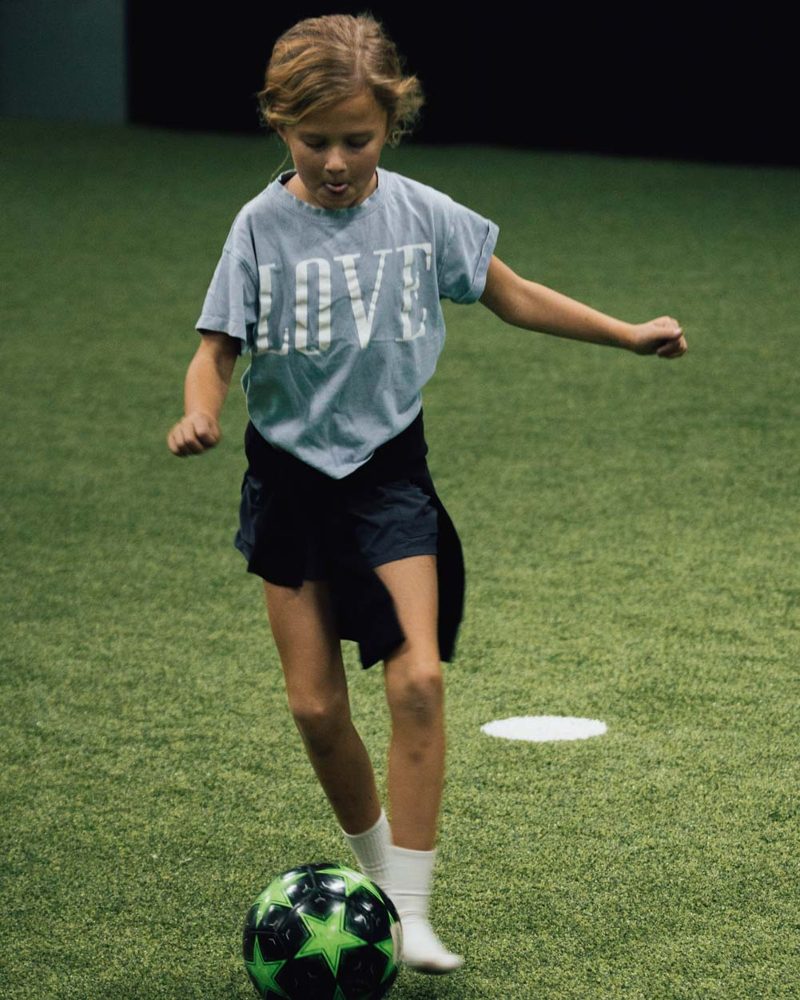
At Prestige Indoor Sports in Overland Park, we are obviously biased toward indoor, but we want you to arrive at that conclusion honestly, with your eyes open to what outdoor does better. Below you will find a fair breakdown of where each setting wins, a real comparison of the factors that matter, and a quick estimator that shows how lost weeks quietly shrink a year of development. By the end you will understand why we treat indoor as the dependable engine of a player's growth and outdoor as the proving ground it feeds.
What outdoor soccer genuinely does better
Let us give outdoor its due, because it earns it. A full-sized field teaches things a smaller space simply cannot. Long-range passing, switching the play from one flank to the other, reading space over forty yards, timing a run behind a back line, pacing yourself across ninety minutes of real distance. Those are big-picture, full-sided skills, and they need a big field to develop. Outdoor also exposes players to the messy variables of a real match. Wind that knocks a goal kick sideways. A bumpy patch that makes a routine trap an adventure. Sun in the eyes. Learning to compete through all of that is part of becoming a complete player, and no indoor box recreates it perfectly.
The case for grass and open space
There is also something to be said for the rhythm of the outdoor game. The pauses, the resets, the spacing that comes with eleven versus eleven, all of it builds game intelligence in a way tight-quarters work does not. We are not interested in pretending otherwise. A player who never plays outdoors will struggle to translate sharp feet into a full-field game. The honest position is not indoor instead of outdoor. It is indoor as the reliable foundation underneath everything, with outdoor layered on top whenever the weather and the calendar allow.
Read the chart fairly. Outdoor owns the bottom two rows, and those matter. But look at the top three. Consistency, touches, and reliability are the quiet, compounding factors, the ones that decide how much total development a player banks over a season. That is where indoor pulls ahead, and it is a bigger gap than the chart can show in a single picture.
Coach's tip: Development is not won on your best day, it is won on your average day. A player who trains a clean forty sessions a year will pass the one who trains a great twenty almost every time. Consistency beats intensity, and consistency is exactly what weather takes from outdoor programs.
The two advantages outdoor cannot match: surface and touches
Two things define why indoor reps build skill so efficiently, and both come down to the environment. The first is surface consistency. On grass, every session is a slightly different planet. The ball rolls fast on dry turf, sticks in wet grass, skips off frozen ground, and dies in long fields. A player constantly adjusts to the surface instead of grooving a clean, repeatable touch. Indoors, the turf is identical every single time. That sameness is not boring, it is gold. It lets a player's first touch, plant foot, and shooting mechanics become automatic, because the surface stops moving the target.
The second is touches per minute. In a tight indoor space, the ball finds your player far more often than it does spread across a full outdoor field, where a kid can go several minutes without touching it during a drill. More touches in less time means more repetitions, and repetition is how skill is built. A focused indoor hour can deliver the meaningful ball contacts of a much longer, more spread-out outdoor session. For younger players especially, those compressed reps are where dribbling, control, and confidence come from. If touch and technique are the priority, our private soccer training in Overland Park is built around exactly this kind of high-rep, high-feedback work.
How many weeks does Kansas City weather actually cost you?
This is the part KC parents feel in their bones. Our winters are genuinely brutal, our springs flood the fields and turn lots to mud, and our summers can climb to a heat index that shuts youth sports down entirely. Outdoor programs lose weeks to all three every year, and a lost week is not neutral. It is a week of progress that simply does not happen. The estimator below is not about price, it is about reps. Drag the sliders to see how a year of training shrinks when weather erases weeks, and how consistency quietly compounds.
Drag the sliders. Outdoor loses weeks to KC weather, indoor keeps all of them.
Slide weeks down to feel what a weather-hit outdoor year really costs.
Play with the weeks slider and the point lands fast. Drop from fifty-two weeks to thirty-five, the realistic outdoor number once winter, flooded spring fields, and dangerous summer heat take their cut, and the yearly total collapses. Those are not abstract weeks. They are the touches, the cuts, the reps a player needed, gone to a forecast. Indoor simply does not have that line item. Every week on the calendar is a week you can actually train.
Focus, safety, and the underrated indoor edge
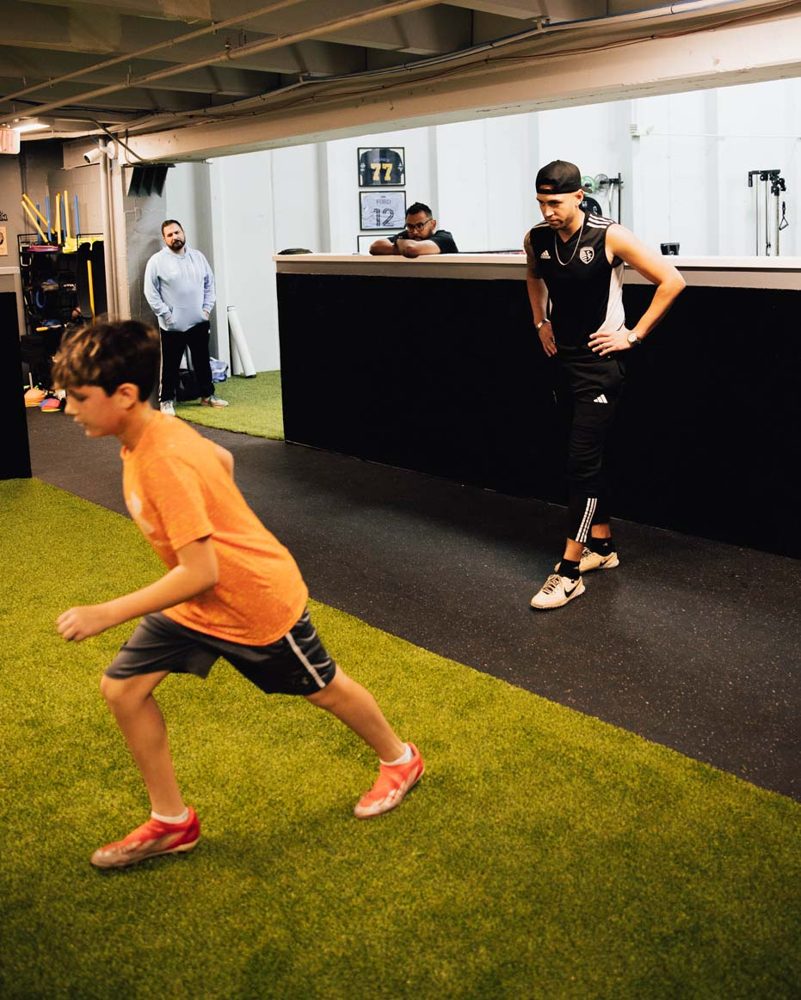
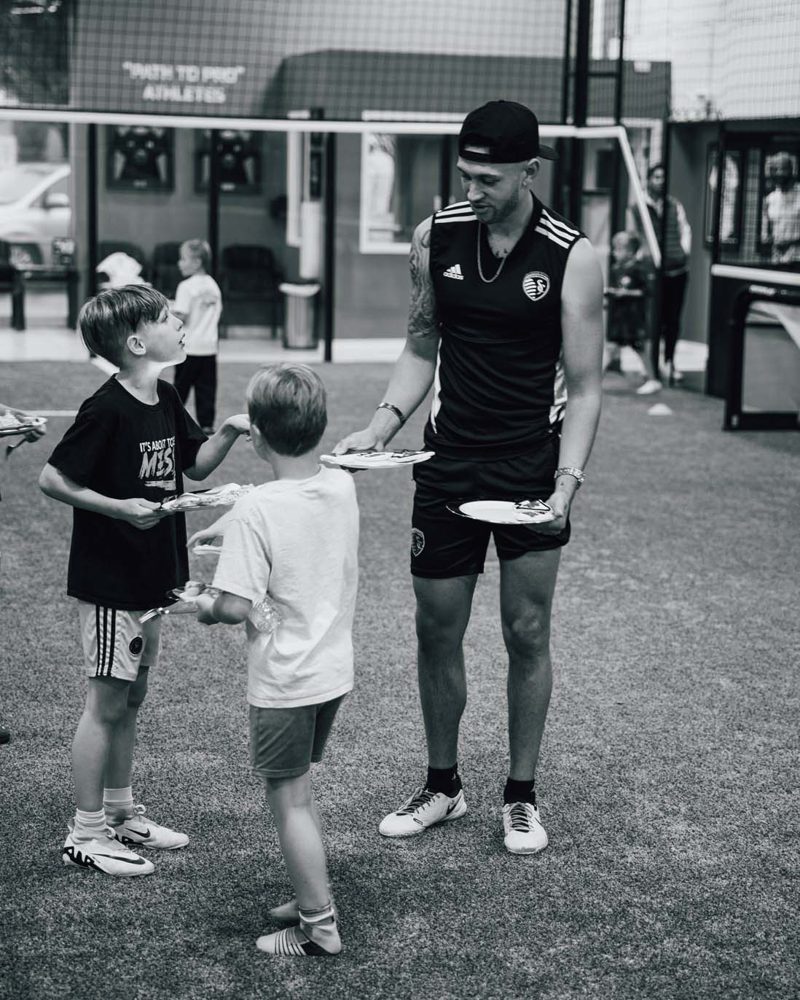
There is a quieter benefit that does not show up on a stat sheet. Indoor sessions tend to be more focused. There is no wind ruining a coaching point, no scorching sun draining energy in the first ten minutes, no shivering through a January drill. The environment is controlled, so the players' attention stays on the work. Coaches can be heard, corrections land, and kids stay engaged because they are comfortable. Comfort here is not coddling, it is the condition that lets real learning happen.
Safety matters too, and it is not a small thing in our climate. Training through a dangerous summer heat index or on icy, uneven winter ground carries real risk, from heat illness to slips and awkward falls on frozen turf. An air-conditioned indoor facility removes those hazards. The American Academy of Pediatrics and other groups have long stressed sensible limits around extreme heat and unsafe conditions for young athletes, and you can read their general guidance on keeping kids active and safe at HealthyChildren.org. Indoor training lets a player chase development hard without gambling on the weather to cooperate. If you want to see how we structure that year-round, our indoor soccer training in Johnson County page walks through it.
Not sure how to balance indoor and outdoor?
Tell us your player's age, team, and schedule. We will give you an honest plan, not a sales pitch.
So which one actually builds better players?
Here is the honest verdict. The strongest players we see are not indoor-only or outdoor-only, they are both, used for what each does best. Outdoor for the full-sided game, the spacing, the long passing, the real-match chaos. Indoor for the dependable, high-rep skill building that never gets canceled and never changes underfoot. But if you forced us to name the engine, the thing that drives steady week-over-week improvement through a Kansas City year, it is indoor, and it is not especially close. Outdoor gives you the great days. Indoor gives you all the days, and development is built on all the days. That is why we recommend an indoor base year-round, with outdoor stacked on whenever the weather lets your player out. To talk through the right mix for your family, our coaches are happy to help, and you can see how to get started on our sign-up page.

Frequently Asked Questions
Is indoor soccer training better than outdoor for youth players?
Both have real value, but for steady year-round development in Kansas City, indoor has the edge. It offers a consistent surface, more touches in less time, and zero weather cancellations, which means a player banks far more usable reps over a season. Outdoor is still important for full-field game sense, long passing, and real-match conditions, so the best approach uses indoor as the reliable base and adds outdoor whenever the weather allows.
Why does surface consistency matter so much for skill development?
On grass, the ball behaves differently every session depending on whether the field is wet, dry, frozen, or long, so a player constantly readjusts instead of grooving a repeatable touch. Indoor turf is the same every time, which lets first touch, plant foot, and shooting mechanics become automatic. That repeatability is one of the main reasons indoor reps build clean technique so efficiently.
How many weeks of outdoor training does Kansas City weather actually cost?
It varies year to year, but brutal winters, flooded spring fields, and dangerous summer heat can realistically erase five to fifteen weeks of outdoor sessions, sometimes more. Each lost week is lost progress, since skill is built through consistent repetition. Indoor training removes that variable entirely, so every week on the calendar is a week you can actually train.
Does training indoors mean my child will miss out on real game experience?
No, as long as indoor is paired with outdoor play, which we always recommend. Indoor is where players sharpen touches, control, and quickness in a focused, weatherproof setting, while outdoor games and practices develop spacing, long passing, and full-field decision making. The two complement each other, and using indoor as a year-round foundation actually makes a player better when they step back onto the outdoor field.
Where is your indoor soccer training located near Overland Park?
Our facility is at 7373 W 107th St, Overland Park, KS 66212, in the heart of Johnson County. We are an easy drive for families from Overland Park, Olathe, Leawood, Lenexa, Prairie Village, Shawnee, and the greater Kansas City metro. You can reach us at (913) 568-8145 or through our contact page to ask which program fits your player.
Prestige Indoor Sports | Kansas City Metro Area | (913) 568-8145 | 7373 W 107th St, Overland Park, KS 66212
Ready to Get Started at Prestige Indoor Sports?
Book a free assessment with a Johnson County coach and put a real plan behind your player's development.