
The email came on a Tuesday night. Your daughter trained hard all spring, she loves the game, and the roster that just landed in your inbox does not have her name on it. Or maybe tryouts are three weeks out and you can already feel the knot in your stomach, because you have watched her play and you know she is close. You can see it. The coaches just have not seen it yet. If you are a parent in Overland Park, Leawood, Olathe, or anywhere across the Kansas City metro staring down a club tryout, this guide is for you. We are going to skip the pep talk and get specific about what actually separates the kids who make the team from the ones who get cut, and exactly how to close that gap before the next whistle blows.
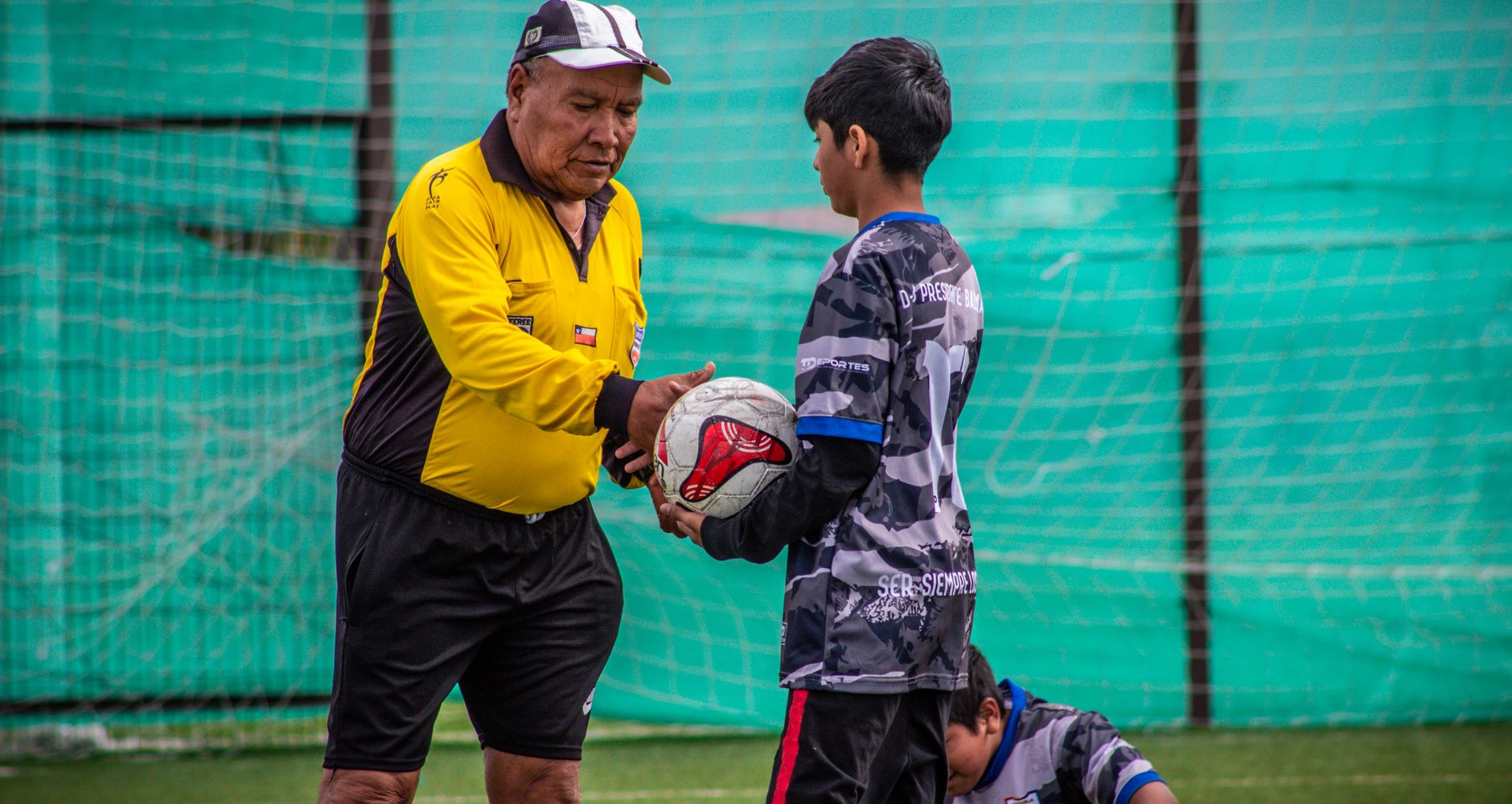
Here is the truth most parents only figure out after the third disappointing tryout: a club roster decision rarely comes down to raw talent. It comes down to a short list of things a coach can evaluate in a 90-minute session full of nervous kids. Your child does not need to become a different player. She needs to become a clearer version of the player she already is, in the exact moments a coach is watching. That is a fixable problem, and it is precisely the kind of problem one-on-one training was built to solve.
What Club Tryout Coaches Are Actually Scoring
Walk into any competitive tryout in Johnson County and you will see 40 kids and three coaches with clipboards. Those coaches are not grading effort, and they are not grading how much your kid loves soccer. They are grading a handful of observable skills, fast, because they have to make cuts by the weekend. When you understand the scorecard, you stop guessing and you start preparing for the right things. The bars below are illustrative, not a published formula, but they reflect how competitive club evaluators tend to spend their attention during a tryout.
First touch is the tiebreaker
When a coach has two players who look similar, first touch decides it almost every time. A clean first touch under pressure tells a coach this kid can play in tight spaces, keep possession, and make the players around her better. A heavy touch that bounces off her foot says the opposite, even if she is faster and fitter than everyone else. The good news is that first touch is one of the most trainable skills in the whole game, and it improves the fastest with repetition against a real opponent or a coach feeding live balls. It is also one of the first things that falls apart on outdoor grass that is soft, bumpy, or soaked, which is one more reason a consistent surface matters during prep season.
1v1 and decision speed get noticed in seconds
Coaches lean forward when a player takes someone on and wins, or when she receives the ball already knowing where her next pass is going. That is not natural talent. That is the product of having seen those exact situations hundreds of times in practice so the in-game version feels familiar. Group practice gives a kid maybe a handful of meaningful 1v1 reps in an hour. Concentrated work gives her dozens, and that difference compounds quietly until it shows up on tryout day as composure the other kids do not have.
Coach's tip: If your child freezes or rushes when the ball comes to her in a crowd, that is not a confidence problem you can talk her out of. It is a reps problem. Confidence in soccer is just familiarity wearing a different jersey, and familiarity is built one focused touch at a time.
Honest Self-Check: Is Your Player Tryout-Ready?
Before you spend a dollar on training, it helps to know where your child actually stands against the things coaches grade. Tick the boxes below that genuinely describe your player. Be honest, because a sugarcoated answer here just leads to another cut later. Your score points you toward the kind of prep that fits where she really is right now.
Tick every box that honestly describes your player today.
Tick the boxes that describe your player to see where they stand.
Why 1-on-1 Training Closes the Gap Faster Than Group Play
Plenty of well-meaning parents respond to a cut by signing their kid up for more group sessions, more pickup, more rec. More soccer feels like the answer. But if your child is standing in a line waiting for a turn while a coach manages 12 other kids, she is not getting more of the thing that actually moves the needle. She is getting more standing around. The math on this is brutal once you see it laid out plainly.
Drag the sliders to see your player's weekly focused touch time.
Drag the sliders to match your player.
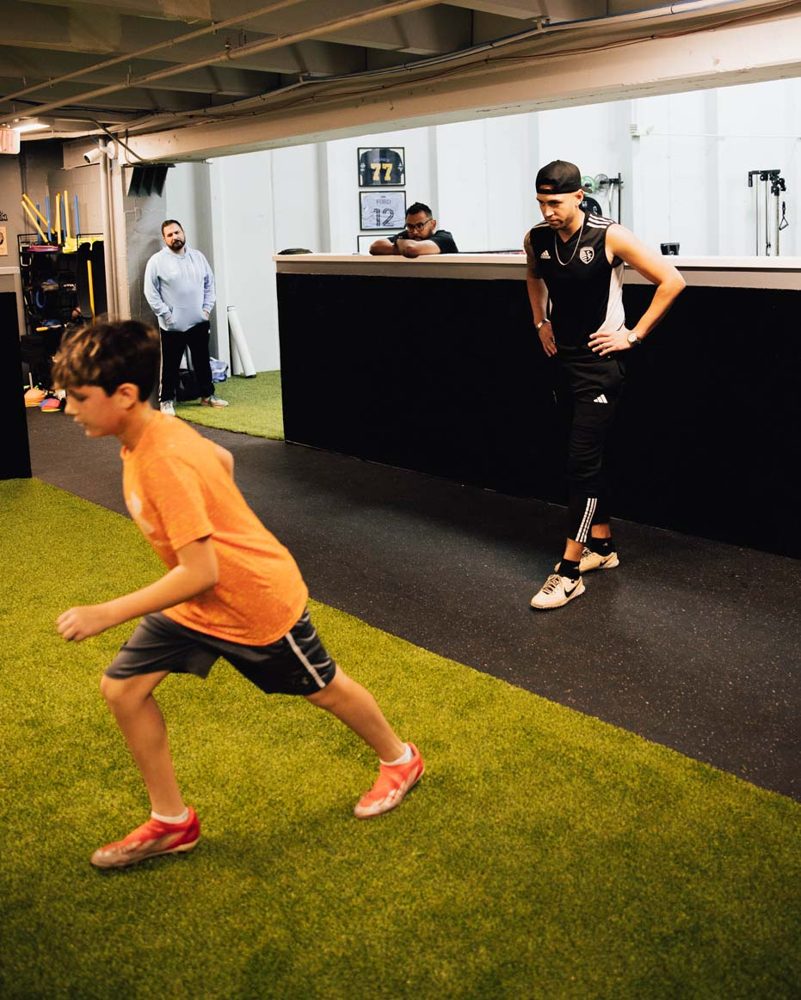
See private training across Johnson County →That calculator is illustrative, but the principle behind it is rock solid. In a private session, every single touch is your child's. There is no line. There is no waiting for 11 other kids to take their turn. A coach watches one player, spots the exact flaw in her receiving angle or her plant foot, and corrects it on the very next rep. That feedback loop, error to correction in seconds instead of weeks, is the whole reason 1-on-1 work compresses months of group development into a focused block.
Reps tailored to the exact weakness
Group training has to serve the middle of the room. The drill that helps the struggling kid bores the advanced kid, and the drill that challenges the advanced kid leaves the struggling kid behind. Your child is neither of those averages. She is a specific player with two or three specific gaps. Private training spends the entire hour on those gaps and nothing else. If her weak-foot finishing is the problem, she finishes with her weak foot for an hour, not for the four reps a group drill allows.
Faster correction, accelerated confidence
Here is what parents notice first, usually within a few sessions: their kid walks differently. The hesitation that used to show up in the box starts to fade, because she has now made that exact play correctly a hundred times in training. Confidence is not a speech. It is evidence. When a player has the receipts, she stops second-guessing and starts competing, and that shift is exactly what a tryout coach can see from across the field.
Tryouts coming up fast?
A short, focused private block can change what a coach sees in three weeks.
The Indoor Advantage for Tryout Prep
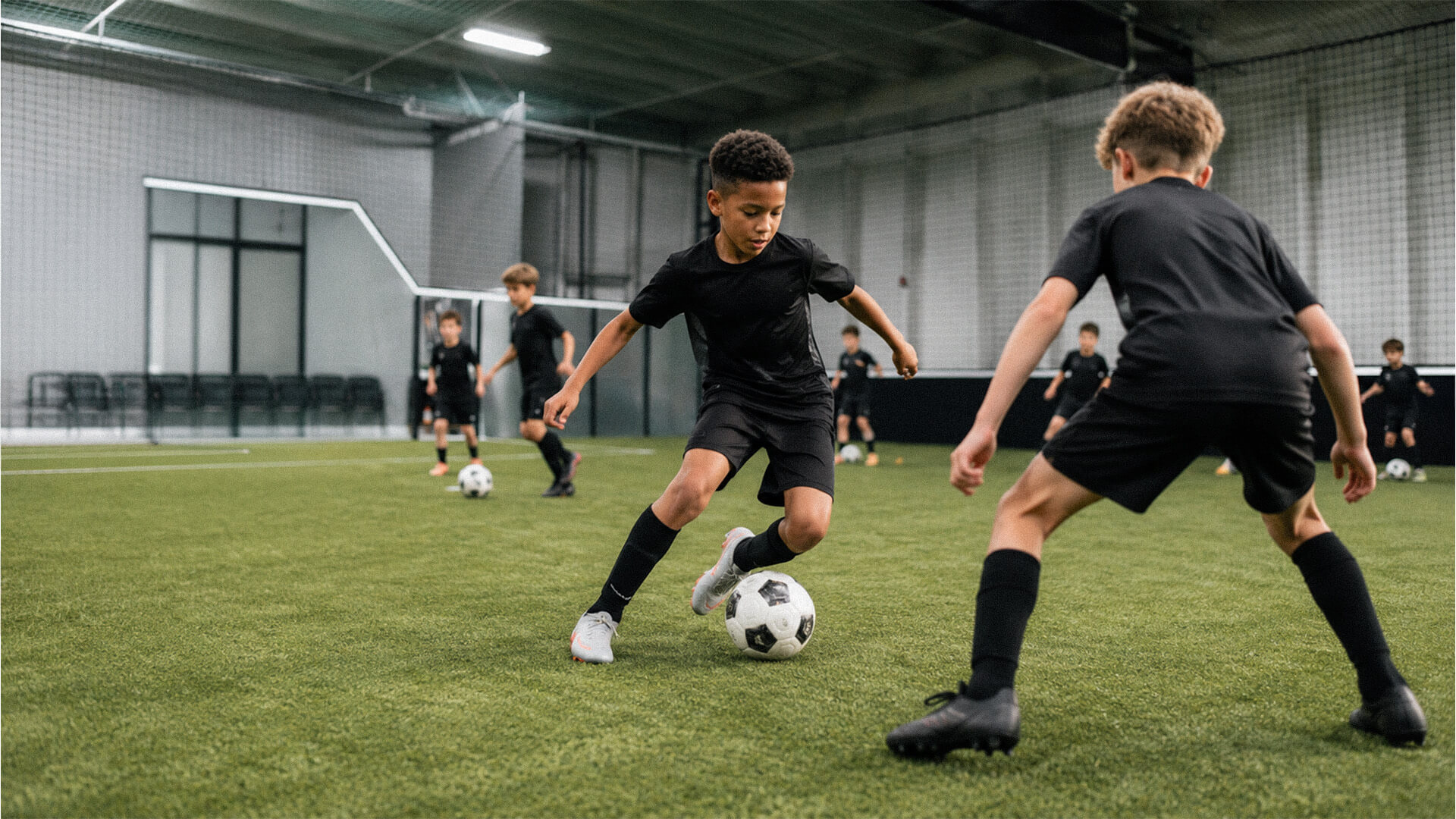
There is one more reason Overland Park families come to us specifically when a tryout is on the line: we train indoors, year-round, on a consistent surface. That matters more than it sounds. A Kansas spring can wipe out a week of outdoor field time with rain, wind, or a soaked pitch, and when you are counting down to a tryout date, you cannot afford to lose sessions to weather. Inside, every session happens as scheduled. The surface is the same every time, so your child builds a reliable touch instead of constantly readapting to mud or uneven grass.
The indoor environment is also faster. The ball moves quicker off the surface, the space is tighter, and your child gets more touches in less time. That faster pace is precisely the kind of pressure she will feel at a competitive tryout, so she shows up already used to it. Whether you are coming from Leawood, Lenexa, Olathe, or right here in Overland Park, you can plan a prep block knowing not a single session gets canceled.
How a Private Tryout-Prep Block Actually Works
Parents always want to know what they are signing up for, so here is the honest version. A focused tryout-prep block is not endless. It is a targeted run of sessions built around a date on the calendar, and it usually moves through four stages.
- Diagnosis. The first session is mostly evaluation. The coach watches your player move, receive, finish, and defend, then names the two or three gaps that are most likely costing her the roster spot.
- Targeted reps. Every session after that drills only those gaps, with live feedback and correction on each rep, until the weak movement becomes the natural one.
- Pressure simulation. As tryouts get closer, the coach adds the crowd, the speed, and the nerves, so your child has already rehearsed the exact moments that will decide the day.
- Confidence carryover. By the final sessions, the player is performing the corrected skills automatically, which is the whole point. She walks into the tryout knowing she can do it, because she already has.
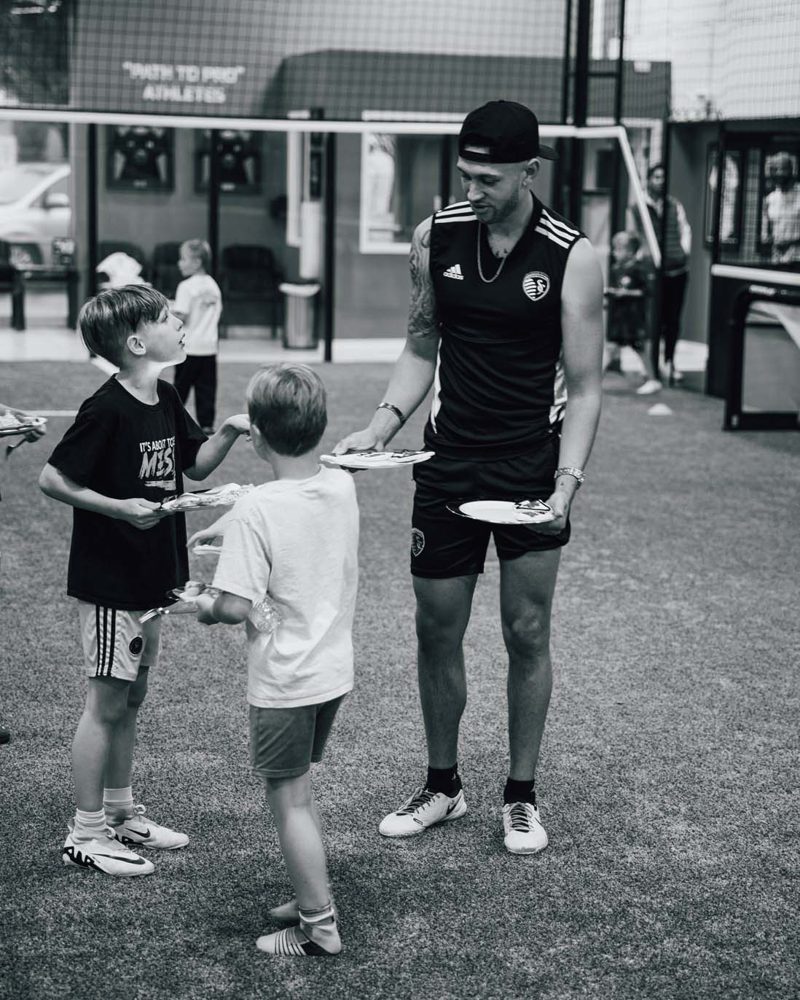
If you want to know who would actually be coaching your child, that matters, and you can read about the people who run these sessions on our coaches page. For families aiming at the highest competitive levels, it also helps to understand the landscape these players are trying to reach, which you can explore through MLS NEXT, the top youth development platform in the country.
Overland Park
1-on-1 sessions minutes from home, built around your player's exact gaps.
Overland Park training →What This Looks Like When It Works
The pattern repeats every season. A kid gets cut, the family is frustrated and a little discouraged, and they almost give up on competitive soccer entirely. Then they try a focused block of private work instead of just more group play. The coach finds the two real gaps, drills them relentlessly, and the player walks into the next tryout looking like a different version of herself, not because she became someone new, but because the player she always was finally showed up in the moments that counted. That is the entire promise of one-on-one training. Not magic. Just the right reps, aimed at the right problem, with someone watching every single one.
If your child just got cut, that result is not a verdict on her future. It is information about a gap, and gaps close fast when you train them directly. If tryouts are still ahead, you have a window right now to make sure the player the coaches see matches the player you already know is there. Either way, the next step is the same: a single evaluation session that tells you exactly what to work on.
Make the next tryout the one she makes
Book a private session in Overland Park and let a coach build a plan around your player's exact gaps. No lines, no waiting, just focused reps that close the distance to the roster.
Frequently Asked Questions
My child just got cut from a club team. Can private training really make a difference before the next tryout?
Yes, and usually faster than parents expect. A cut almost always comes down to two or three specific gaps a coach noticed, like a heavy first touch or hesitation in 1v1 situations. Private training in Overland Park spends the entire session on exactly those gaps, with a coach correcting each rep in real time. Because the feedback loop is so tight, players often look noticeably sharper within a few weeks, which is plenty of runway before most club tryout cycles come back around.
How is 1-on-1 training better than just signing my kid up for more group sessions?
In a group session your child shares a coach with a dozen other kids and spends a lot of the hour waiting in line for a turn. In a private session, every touch is hers and the coach watches only her, so she gets far more focused repetitions and instant correction. Group play serves the average of the room, while 1-on-1 training is built entirely around your individual player's weak spots, which is why it closes tryout gaps so much faster.
What ages do you offer private soccer training for in the Kansas City metro?
We work with youth players roughly ages 5 to 18, from kids just falling in love with the game to teenagers chasing competitive club spots and college opportunities. Sessions are tailored to the age and level of the player, so a young beginner and a high-school ECNL hopeful each get coaching aimed at where they are. We serve families across Overland Park, Leawood, Olathe, Lenexa, and the wider Johnson County and Kansas City area.
Why does training indoors matter for tryout preparation?
Indoor training means no canceled sessions. A rainy Kansas spring can wipe out outdoor field time at the worst possible moment, but inside, every session happens exactly as scheduled, which is critical when you are counting down to a tryout date. The consistent surface also lets your child build a reliable first touch instead of readapting to mud or uneven grass, and the faster indoor pace mirrors the pressure of a real competitive tryout.
How many private sessions does my child need to be ready for a club tryout?
It depends on where your player is starting and how close the tryout is, which is why the first session is mostly evaluation. Many families see strong results from a focused block of one to three sessions per week leading up to the date, concentrated entirely on the player's two or three biggest gaps. After the evaluation, your coach will recommend an honest plan rather than selling you sessions your child does not need.
Prestige Indoor Sports | Kansas City Metro Area | (913) 568-8145 | 7373 W 107th St, Overland Park, KS 66212
Ready to Get Started at Prestige Indoor Sports?
Book a free assessment with a Johnson County coach and put a real plan behind your player's development.